









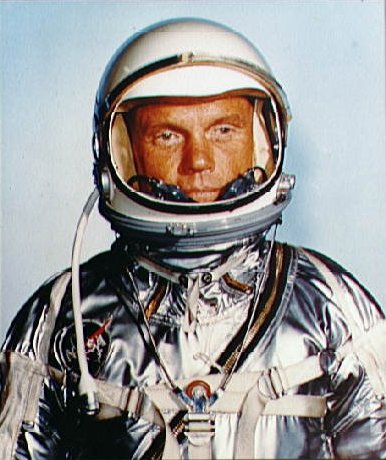

On Feb. 20, 1962, NASA astronaut John Glenn launched from Florida’s Cape Canaveral inside a tiny capsule named Friendship 7
7
 7
7The Mercury spacecraft circled Earth three times, ultimately splashing down near the Turks and Caicos Islands four hours and 55 minutes after liftoff.
It was the United States’ first-ever crewed orbital spaceflight — a milestone that the nation’s Cold War rival, the Soviet Union, had notched 10 months earlier, with the landmark mission of Yuri Gagarin.
On Feb. 20, 1962, NASA astronaut John Glenn launched from Florida’s Cape Canaveral inside a tiny capsule named Friendship 7. The Mercury spacecraft circled Earth three times, ultimately splashing down near the Turks and Caicos Islands four hours and 55 minutes after liftoff.
It was the United States’ first-ever crewed orbital spaceflight — a milestone that the nation’s Cold War rival, the Soviet Union, had notched 10 months earlier, with the landmark mission of Yuri Gagarin.
Glenn, one of NASA’s original Mercury 7 astronauts, didn’t exactly fade into obscurity after the hoopla surrounding his landmark flight died down. He retired from NASA in January 1964 but returned to public service a decade later, winning election to the U.S. Senate from Ohio in 1974. He won re-election in 1980, 1986, and 1992, serving a total of four terms in the body.
And Glenn ended up going to orbit again. In October 1998, at the age of 77, he spent nine days aboard the space shuttle Discovery, becoming the oldest person ever to travel to the final frontier.













Add Comment