




My dear readers, throughout the course of human history, there have been certain questions that—when first heard—sound like the title of a science fiction novel. However, upon a little reflection, you realize that these questions actually lie at the very heart of extremely serious scientific inquiry. The question, “Did life originate on Mars?” is precisely one such question. This idea—which at first glance appears fantastical—has today evolved into a possibility that is being seriously investigated across numerous scientific disciplines, ranging from planetary science to astrobiology. Humanity no longer gazes at the sky merely with romantic curiosity; rather, utilizing telescopes, space probes, and planetary rovers, it operates much like a historian investigating the universe’s past—and in doing so, many truths are coming to light.
The Mars we observe today appears to be a cold, dry, and almost entirely lifeless planet. It possesses a thin atmosphere composed predominantly of carbon dioxide, frozen polar regions, and red dust storms that stretch for kilometers. Yet, scientists know full well that Mars was not always this way. Approximately 3.5 to 4 billion years ago, rivers flowed across the Martian surface; lakes existed there, and—in all likelihood—vast water basins were present. The colossal valley systems and deltas visible on the Martian surface indicate that, at one time, substantial quantities of liquid water existed there. In other words, early Mars may have been a planet far more similar to present-day Earth than we might imagine.
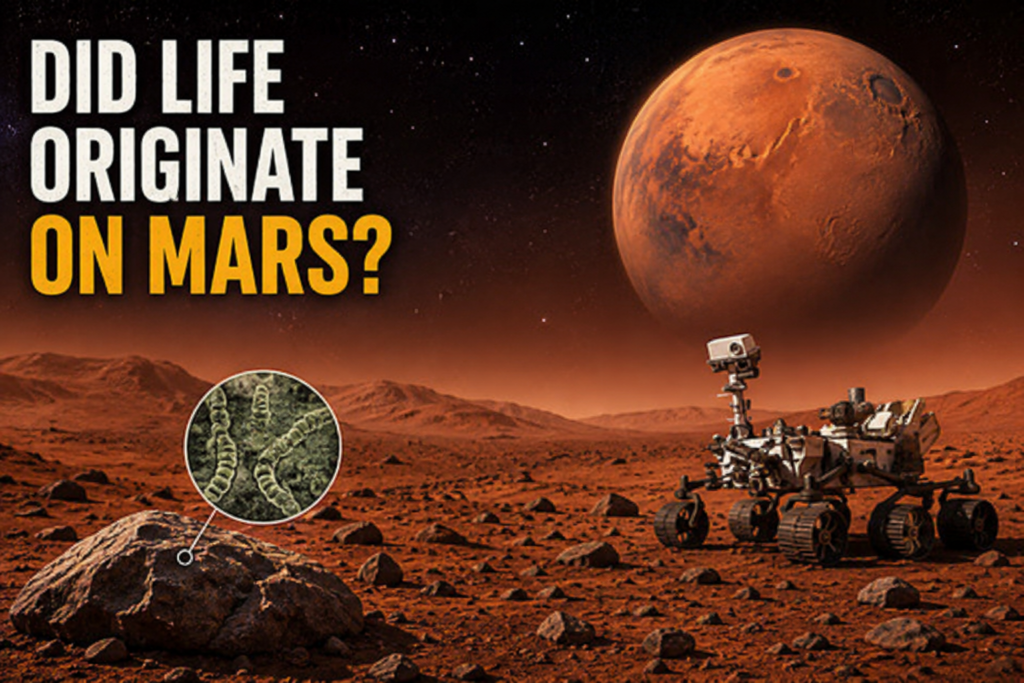
It is at this precise juncture that a rather intriguing possibility emerges in the minds of scientists. If early Mars possessed water, suitable temperatures, and the necessary chemical compounds, this implies that the conditions required for the emergence of the most primitive forms of life were also present. What is even more intriguing is this: during the early epochs of the Solar System, the planets were subjected to an intense bombardment of meteorites. Massive collisions would hurl fragments of rock from planetary surfaces into space. After a journey that sometimes lasted millions of years, these fragments could eventually reach other planets. Today, we know that some of the meteorites found on Earth are indeed of Martian origin; the gas isotopes contained within them match the composition of the Martian atmosphere precisely. In other words, the arrival of rock fragments—broken off from Mars—here on Earth is, on a cosmic scale, actually a quite natural process.
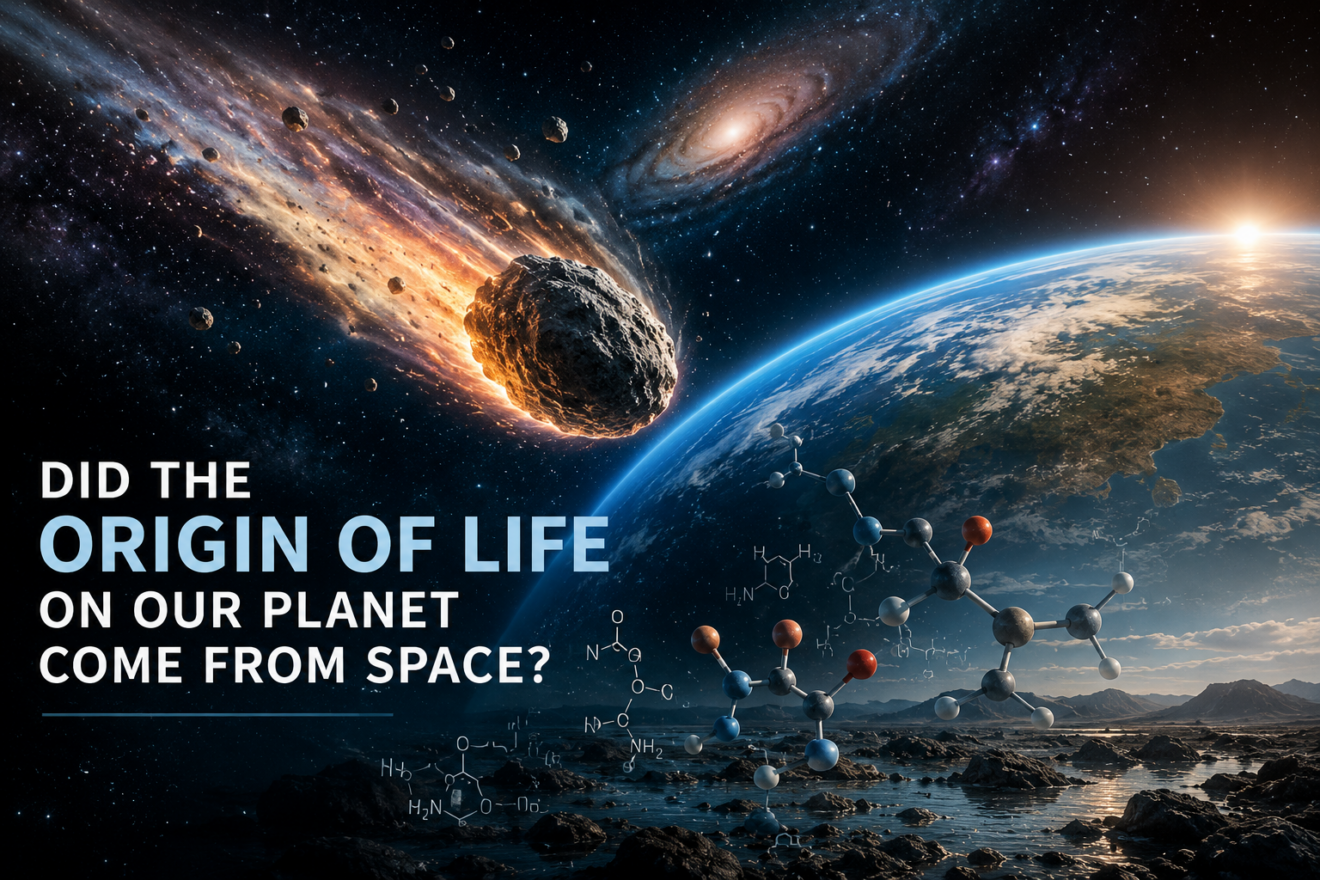
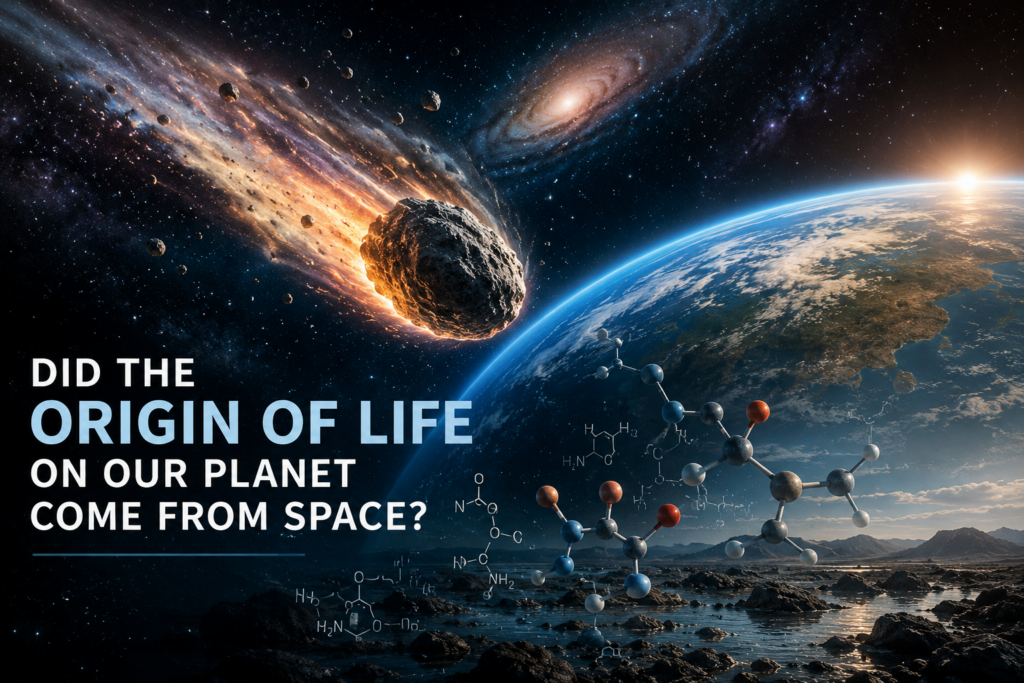
Now we come to the part that truly warrants the label “extraordinary.” If microbial life emerged on Mars billions of years ago, could some of those microorganisms have been preserved inside a rock fragment that broke away from the planet? And could that very rock fragment have crashed onto Earth millions of years later? The theory of panspermia—a concept currently being explored by scientists—posits exactly this scenario. According to this theory, the “seeds” of life can be transported from one planet to another. This implies that life need not originate on a single planet and remain confined there; indeed, according to this theory, life on our own planet may have begun thanks to living cells arriving from space.
Recreating Life in the Laboratory
Laboratory experiments do not entirely rule out this possibility. Some microorganisms are incredibly resilient; for instance, certain bacteria can survive even when exposed to intense radiation. Others can remain viable—in a frozen state—for millions of years. Furthermore, experiments conducted aboard the International Space Station have demonstrated that some microorganisms can survive even brief exposure to the vacuum of space. Thus, if a microorganism were to be preserved within a rock fragment, the theoretical possibility of it surviving an interplanetary journey is not entirely out of the question.
There is another detail regarding timing here that gives one pause. Earth formed approximately 4.5 billion years ago. However, the oldest traces of life currently in our possession date back to about 3.7 billion years ago. In other words, it appears that life emerged a remarkably short time after Earth itself formed. According to some scientists, this seems a bit too rapid; for complex biochemical processes to arise from scratch, this may constitute a rather brief window of time. For this very reason, some researchers speculate that the chemical foundations of life may have originated elsewhere and subsequently been transported to Earth.
Mars as Origin of Life
Mars stands as a strong candidate for this possibility. NASA’s Curiosity and Perseverance rovers have discovered ancient lakebeds, organic molecules, and minerals formed by water on the Martian surface. While these findings do not conclusively prove the existence of life on Mars, they strongly indicate that an environment suitable for life once existed there. Even more exciting is the plan to bring rock samples collected from Mars back to Earth in the coming years. If these samples are found to contain fossilized traces of microbial life, it would mark one of the greatest scientific discoveries in human history.
However, it is also necessary to consider a broader cosmic perspective here. Perhaps the origin of life lies neither on Earth nor on Mars. Perhaps the chemical foundations of life are, in fact, part of a much older narrative. Today, astronomers are discovering complex organic molecules within interstellar clouds. Precursors to amino acids—carbon chains and the fundamental chemical building blocks of life—are capable of forming in the depths of space. In essence, the universe appears to function as a laboratory remarkably predisposed to generating the chemical infrastructure of life.
At this juncture, a truly fascinating thought emerges in the mind: Perhaps life is not a rare miracle in the universe, but rather a natural process that inevitably arises whenever the appropriate conditions are met. If this is true, we may not be alone in the universe. However, there is an even more intriguing possibility: Perhaps we are, in fact, cosmic immigrants. Perhaps a small fragment of rock—broken off from Mars or another planet billions of years ago—reached Earth carrying within it a microscopic seed of life, thereby taking the very first step toward all the biological diversity we observe today.
Astrobiology to Explore Origins of Life
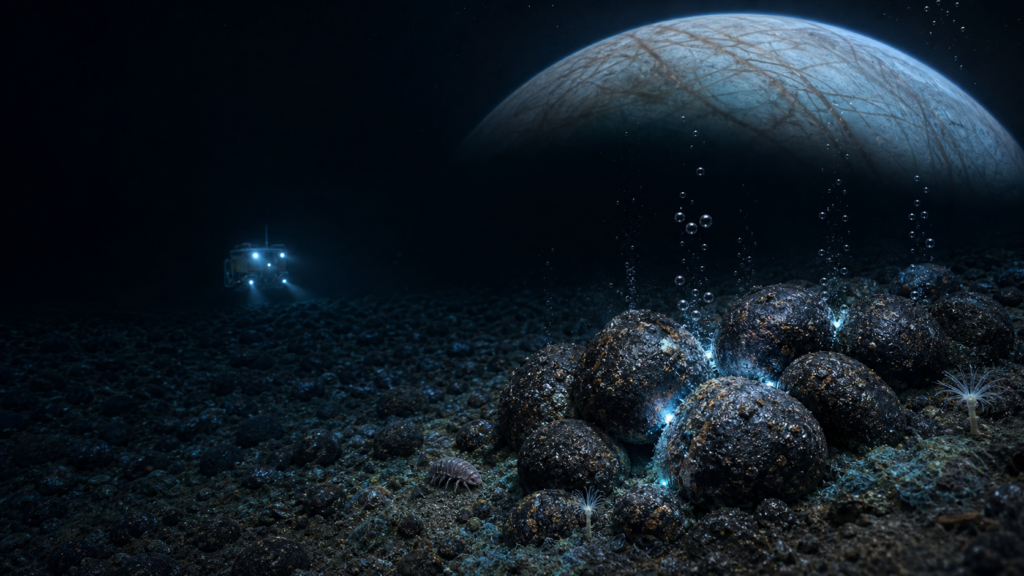
My dear readers, science has not yet provided a definitive answer to this question. However, we can state one thing with absolute clarity: Discoveries made in the field of astrobiology over the next 20 to 30 years could fundamentally alter humanity’s place in the universe. The return of Martian samples to Earth, research conducted on icy moons such as Europa and Enceladus, and advancements in biochemical techniques could yield revolutionary results in this regard.
Perhaps one day, scientists will utter these very words: Humanity’s earliest ancestors were not born on Earth, but on another planet. Should such a discovery be made, we—as humanity—will be compelled to ask ourselves this question: Are we truly children of the Earth, or merely a small fragment of a much grander and far more ancient saga within the Solar System? For the universe sometimes offers us answers far more astonishing than we could ever anticipate. And those answers are, more often than not, far more compelling than anything found in a science fiction novel. Indeed, the true magic of science lies precisely in this impulse to explore the unknown.





Add Comment