



Throughout human history, our greatest fears have often originated from the sky: the prospect of a comet striking Earth, the Sun burning out, supervolcanoes erupting, or the threat of nuclear war. Indeed, much of science fiction is conditioned by such scenarios. Yet, within the realm of theoretical physics, there is talk of a possibility far more terrifying than any of these. Moreover, this scenario is neither a product of Hollywood’s imagination nor the invention of science fiction writers; it arises from one of the most serious theories in modern particle physics.
Its name appears deceptively simple: Strange Matter.
What is Strange Matter?
Although the name sounds innocuous, if it truly exists, it could possess a terrifying capability: transforming not just Earth, but all ordinary matter it touches, into itself. At first glance, this claim might seem exaggerated. However, the history of science consistently reminds us of a fundamental truth: nature is far more extraordinary—and indeed, vastly different—than anything we could possibly imagine.
Everything we see around us today—rocks, trees, people, oceans, and even stars—is composed of protons and neutrons. Inside these protons and neutrons lie quarks known as “up” and “down” quarks; these are the building blocks of the universe.
This is where the story takes an intriguing turn. In the 1970s, physicists such as Edward Witten and various other theorists began to ask a question: Could the most stable form of matter in the universe be something entirely different from the atoms we know—perhaps a substance containing “strange quarks”? If the answer were yes, it would imply that all the matter we are familiar with exists merely in a state of metastable equilibrium.
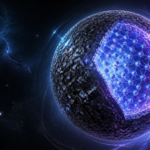
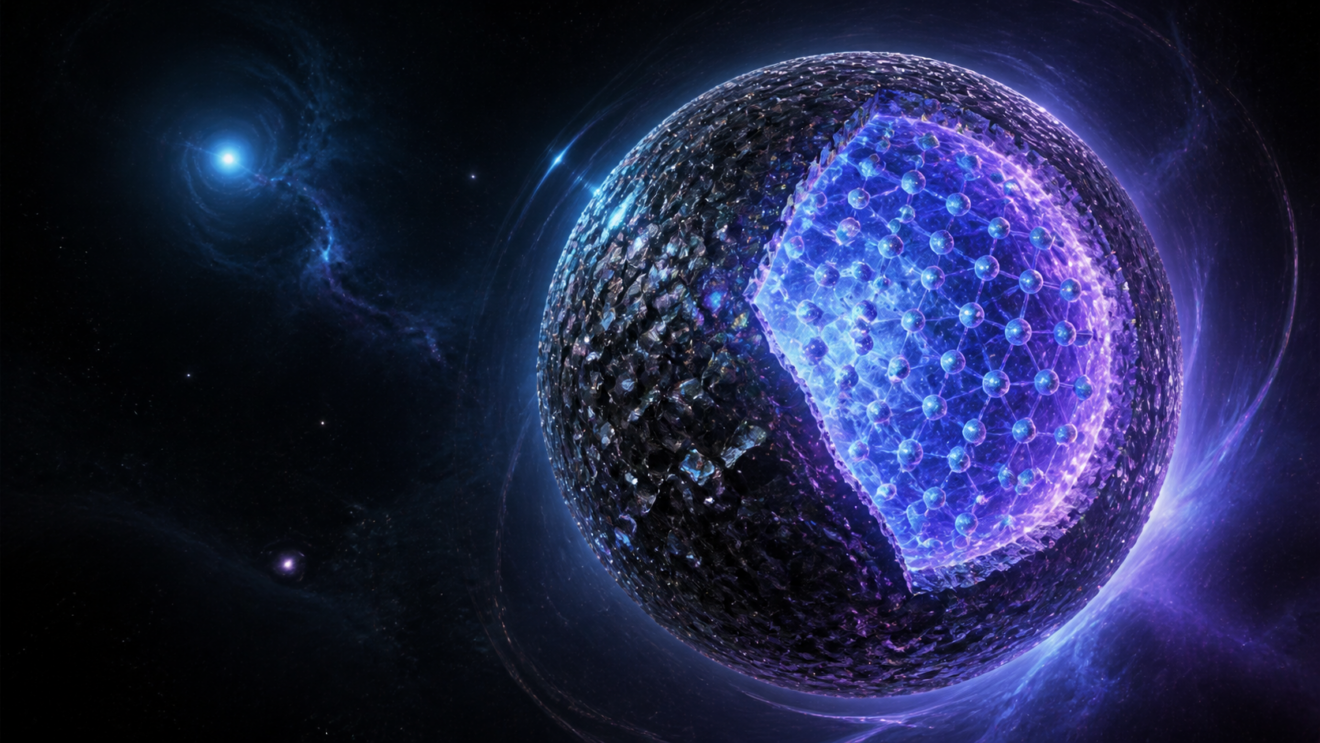
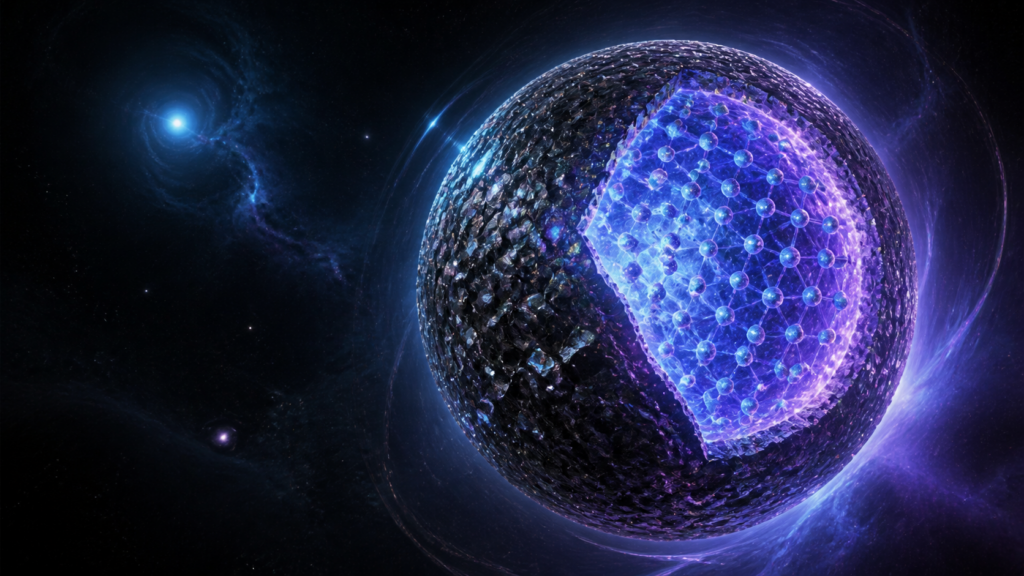
When first proposed, this idea was considered outlandish. Yet, as calculations progressed, the theory began to appear too compelling to be dismissed outright. This is because the pressure at the core of some neutron stars is so immense that protons and neutrons can break apart, effectively transforming into a giant soup of quarks. This is where strange quarks come into play. If ordinary quark matter begins producing strange quarks under sufficiently high pressure, a new, more stable form of matter with lower energy—known as “Strange Matter”—can emerge. The truly terrifying part begins right here.
Strange Matter is Capable of Transforming and Destroying the Entire Universe
According to the theory, if a small fragment of Strange Matter were to reach Earth, it could begin converting the ordinary atoms it contacts into Strange Matter as well. One atom to the next, then the next. Like a row of falling dominoes, our entire planet could instantly transform into Strange Matter. Scientists call this the “Strangelet Scenario.” Consequently, in the 1990s, before particle accelerators were activated, interesting debates arose in certain circles: could Strange Matter be accidentally created in the laboratory? There were even people who claimed that the world would end before the Large Hadron Collider (LHC) went online.
However, scientists have explained quite clearly why this is not possible. For billions of years, Earth has been bombarded by cosmic rays with energies far higher than anything our laboratories could produce. If such a transformation were possible, our planet would have already turned into “strange matter.”
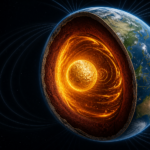
So, for now, we can sleep soundly. Yet, this theory has not been completely discarded, as there are objects in the universe that exhibit properties difficult to explain. For instance, the fact that some neutron stars have radii much smaller than expected strengthens the possibility that they might contain strange quark matter. Some astrophysicists even speculate that these objects could actually be “quark stars.” If such stars do exist, there might be a second class of matter in the universe beyond the kind we are familiar with.
This would mean rewriting the physics textbooks. Even more intriguing is the fact that this theory is not limited to cosmology alone. Experiments currently being conducted on quark-gluon plasma at CERN, Brookhaven National Laboratory, and various particle accelerators around the world aim to understand the first microseconds of the Big Bang. Perhaps, at the very moment of the universe’s birth, it was filled with exotic matter akin to strange matter. Then, as the universe cooled, the atoms we know today were formed. In this scenario, we might not represent the universe’s most fundamental state, but rather a product of a later stage of evolution. This idea changes the very way we view ourselves.
Is the Structure of the Universe Different from What We Know?
Perhaps we are not the “normal” ones in the universe. Perhaps it is the matter structure we know today that is truly “strange.” This is precisely what excites scientists. Science often advances not through answers, but through the right questions. To date, strange matter has not yet been definitively observed. However, throughout the history of physics, many theories have originated in mathematics only to be confirmed by telescopes years later. Black holes, gravitational waves, and the Higgs boson are prime examples of this.
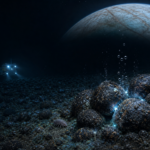
Perhaps strange matter will follow the same path. One day, an extraordinary signal from the depths of space might reveal the first strange star to us. Or perhaps a new realm of matter—one we have never seen before—awaits us beneath the lunar surface or within the heart of a neutron star.
Opportunities Arising from Scientific Discovery
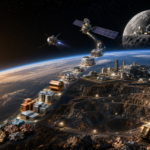
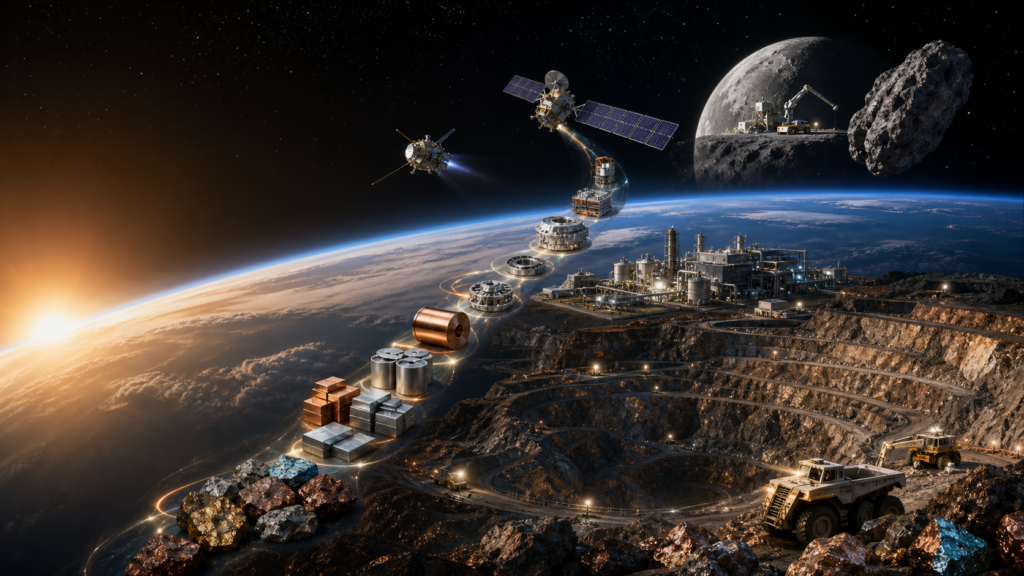
Humanity has begun to view not only Earth but the entire Solar System as a sphere for economic and scientific activity. As discussions turn to lunar bases, Mars missions, and asteroid mining, understanding the exotic materials we might encounter in space is becoming a crucial issue—not just for theoretical physics, but for space security as well. For nations that embrace the concept of a “Space Homeland,” developing rockets is not enough; they must also master the physical realities of the universe that remain undiscovered. After all, the competition of the future will take place not merely among those capable of reaching space, but among those who best understand it.




Add Comment