







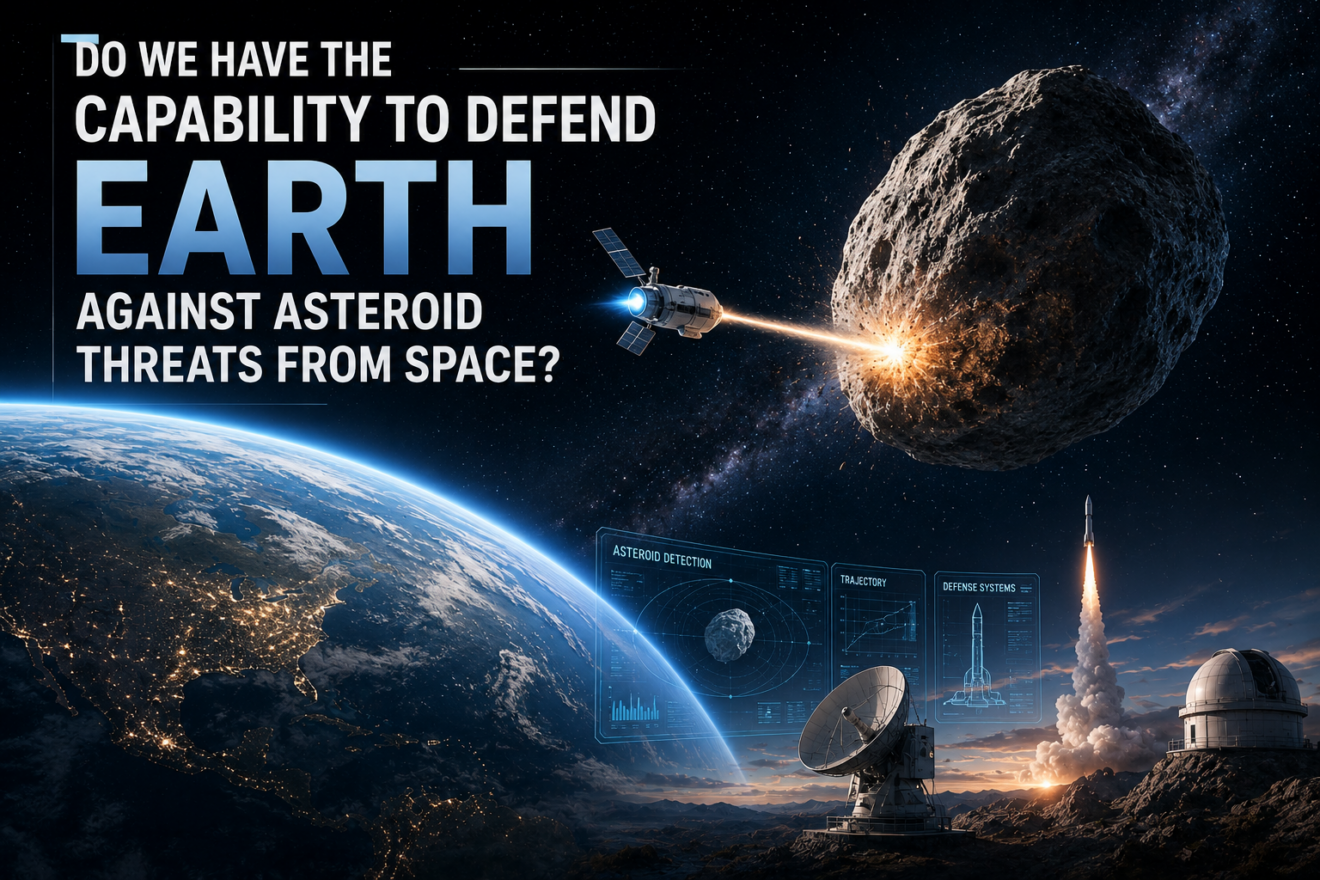

Recently—particularly in the media—reports regarding potential dangers originating from space have been appearing with increasing frequency. Of course, we must not forget that Hollywood consistently produces a variety of engaging films centered on this very subject. Typically, the premise of all these films unfolds in much the same way: an asteroid exceeding a certain diameter is detected hurtling toward Earth, rapidly closing the distance. Government officials declare that such a collision would constitute an extinction-level event, and they deploy either nuclear weapons or powerful laser systems in an attempt to halt the asteroid. In most cases, the film’s protagonist—often in the nick of time—somehow manages to shatter the asteroid, thereby saving the world. And thus, the hero of the story achieves their ultimate objective.
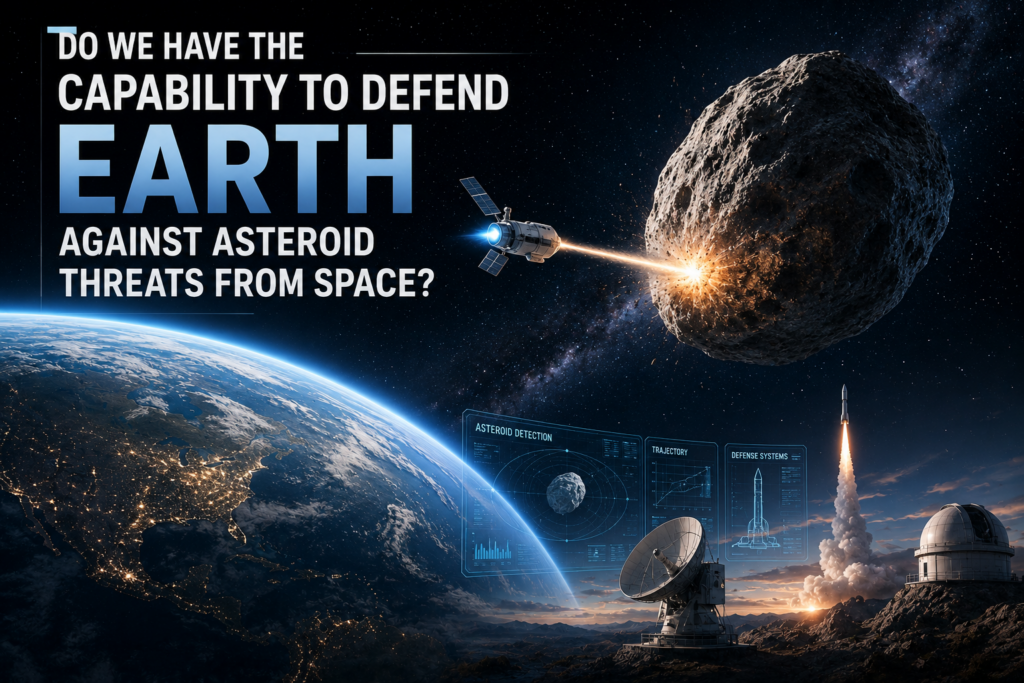
But if such a scenario were to become reality, would we truly possess the capability to stop or destroy a dangerous, incoming asteroid using a similar method? We can answer this question with both a “yes” and a “no.” The primary reason for this is that, should such a hazardous situation arise, we would—even in a worst-case scenario—be able to detect it months in advance through astronomical observation. Contrary to popular belief, these celestial objects do not move as swiftly as is often imagined; in fact, their velocity does not even reach one-thousandth of the speed of light. Consequently, there is no realistic scenario in which such a threat would materialize abruptly and without warning, forcing us into a desperate race against time. However, when we consider the downside of the situation, we must immediately acknowledge that—unlike in Hollywood movies—responding to a real-world threat of this nature by instantly dispatching a spacecraft or attempting to obliterate the object with nuclear bombs is by no means a simple task.
First and foremost, the critical factor here is the sheer magnitude of the incoming mass. Objects of immense mass inherently possess significant momentum. Momentum, as a physical concept, is derived from the product of mass and velocity. Simply put, the larger and faster an object is, the greater the destructive force it is capable of unleashing. When examining asteroid-like objects, while some may have a diameter or length of merely a few meters, encountering an asteroid hundreds of meters long—though perhaps not highly probable—remains a distinct possibility. Furthermore, every asteroid inherently possesses a specific velocity. By virtue of orbital mechanics and Newton’s Laws, every object within the solar system is bound to orbit the Sun. Moreover, asteroids subject to the gravitational pull of distinct and larger masses undergo gravitational acceleration, potentially increasing their speed even further. In this context, such an asteroid would have a highly destructive impact. However, halting a mass of this magnitude would be no easy feat—even with the aid of nuclear bombs. Indeed—and contrary to cinematic portrayals—the infrastructure required to deliver nuclear missiles to the necessary distances does not yet exist; nuclear missiles follow ballistic trajectories, and their propulsion systems lack the power to carry them beyond an altitude of 5,000 to 6,000 kilometers above the Earth’s surface.
At our current juncture—thanks to astronomical observations and the acceleration of national space programs—our capability to detect potential threats early has improved significantly; nevertheless, the actual challenges encountered in the field remain formidable. As announced by leading Chinese space scientists, plans are underway to attempt to alter the orbit of a target asteroid in the near future through a kinetic impactor demonstration mission. The objective of this approach is to facilitate both observation-based assessment and the precise determination of the impact’s efficacy using a comprehensive space-to-ground monitoring network. Within this framework, an observation spacecraft will first be deployed, followed by the impactor; the resulting effects will then be monitored in meticulous detail.
This is far more complex than the sudden, Hollywood-style notion of “launch a spaceship and bomb it immediately.” The spacecraft must locate its target—with an accuracy margin of just a few tens of meters—throughout a journey spanning months or even years, relying on precise orbital corrections along the way. This demands an extreme level of precision—akin to “long-range marksmanship in space”—given that both the asteroid and the Earth are moving at high velocities. Furthermore, since the internal structure of an object (whether it consists of solid rock or is merely a loose rubble pile) cannot be known with absolute certainty beforehand, an element of uncertainty arises: the same impact might not yield the expected orbital deflection across different targets. Consequently, it is impossible to confidently resolve every potential scenario using a single technique alone. On the other hand, as early warning and detection capabilities improve, the range of intervention options expands: objects can be tracked earlier and more accurately through ground-based wide-area surveys—such as those conducted by China—as well as via multi-telescope networks, radar projects like the “China Compound Eye,” or fixed observation platforms positioned in space. In this sense, early detection facilitates intervention plans that are both less drastic and more effective in countering a potential threat.
At the international level, networks and mission planning groups operating under the auspices of the United Nations (such as IAWN and SMPAG) have long emphasized the importance of coordination. Recent initiatives underscore the necessity of information sharing, joint monitoring, and collaborative mission development—rather than allowing a single nation to unilaterally assume the role of “savior.” Naturally, it is also worth noting that the United States is likewise working on scenarios similar to China’s in preparation for such a potential hazard. Ultimately, transcending the dramatic narratives of Hollywood, the real world offers both hope and a warning. The technologies currently at our disposal—along with planned experiments—bolster our defenses against urgent threats; yet, they also serve as a reminder that intervention options demand large-scale coordination, precision, and flexible strategies that have been prepared in advance. In short, protection is possible, but it is by no means easy; preparation and cooperation are essential. Although our country’s technological capabilities may not yet have reached this advanced level, our “Space Homeland” doctrine dictates that we, too, must contribute to these endeavors in some capacity.










Add Comment