






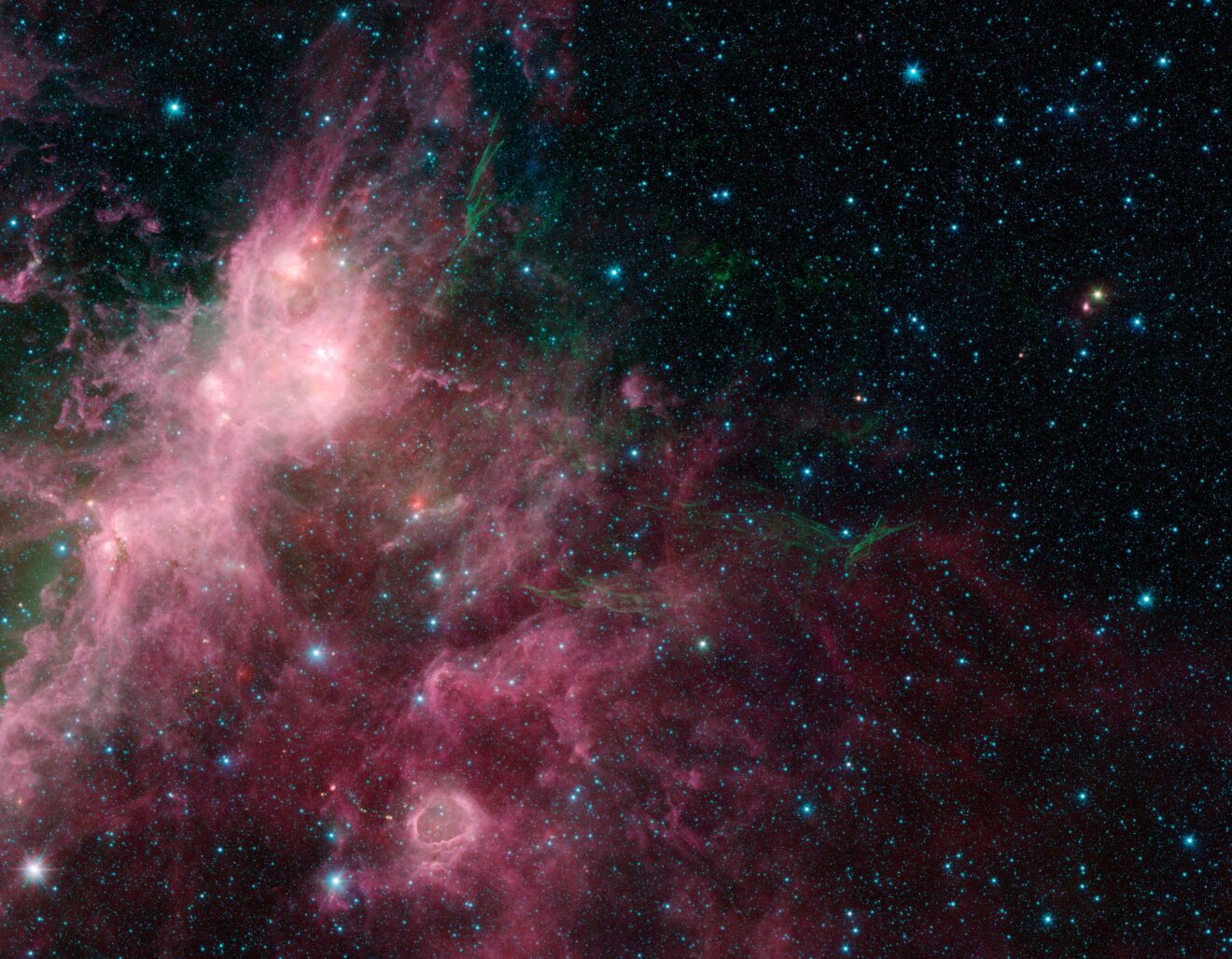

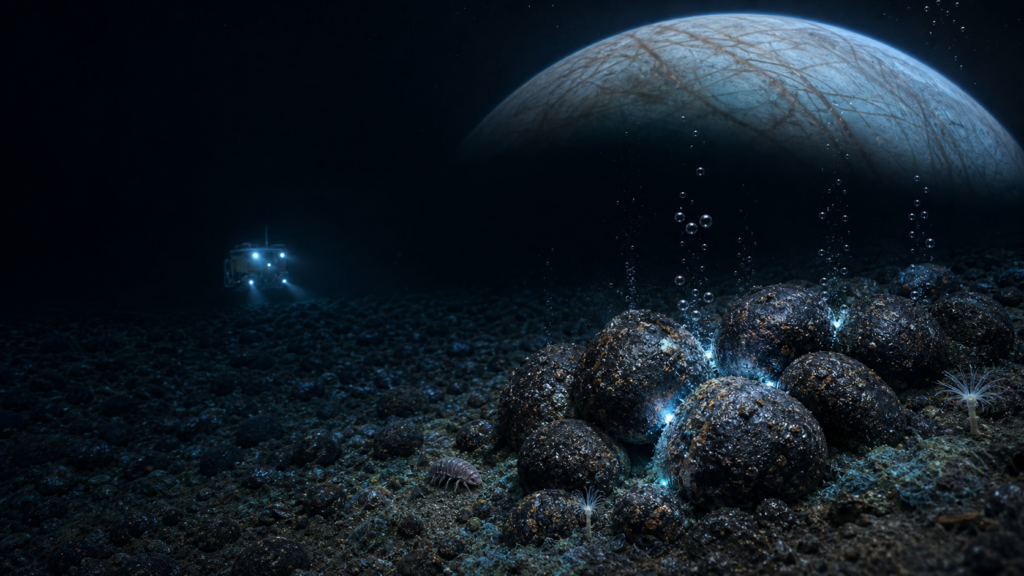
Imagine a universe. Stars shining brightly, planets forming, and elements coming together. But perhaps on that planet, instead of water as we know it, rivers of a liquid composed of methanol might flow. Even if the materials for life exist, the molecules inside the cells might not reach their intended destinations properly. The sky of such a universe might be magnificent. But there might be no living beings to gaze upon that sky. Clearly, science already tells us that every possibility in the universe is possible within the laws of physics.
Kostya, a physicist from Queen Mary University of London Trachenko’s work confronts us with this strange possibility. The research, which made headlines again in October 2026, examines the relationship between fundamental physical constants and the flow properties of fluids from a life-related perspective. The properties of the universe’s smallest building blocks extend to the everyday world within the glass of water we hold in our hands.
What keeps us alive isn’t just having the right atoms. The molecules formed from those atoms need to be able to move, interact, and react. A cell isn’t just a silent warehouse with materials stacked on shelves; it’s a constantly working world of chemistry. Nutrients are transported, waste is removed, and proteins interact with each other. All of this happens under specific physical conditions. The resistance of a fluid to flow is one of the factors determining the conditions for this movement. Life needs not only materials but also movement.
Move a spoon first in honey, then in water. You’ll immediately feel the difference. Now consider that the resistance affecting the movement of molecules inside a cell is vastly different. It might not just be a matter of things slowing down a bit; the balance of interconnected processes could be disrupted, some could stop altogether. A calculation concerning the constants of the universe is suddenly linked to the blood our hearts pump and the functioning of our cells. The great question of the cosmos begins to flow through our veins.
The thought-provoking aspect of the research is that the conditions suitable for element production in stars alone do not guarantee life. In theoretical cases where certain constants have different values together, the flow limits of liquids can change while certain ratios that enable the formation of elements are maintained. In other words, even if the universe is capable of preparing the raw materials for life, it may not be able to provide the physical environment in which those raw materials can transform into a living cell. You can find all the stones to build a building; but the conditions for those stones to come together are also necessary. The calculation of life is longer than a list of materials.
The truly unsettling aspect here is the question of time. The physical order that allows our cells to function today wasn’t established when the first cell appeared. It was fundamental to the workings of nature billions of years before life itself. A heart hadn’t yet beaten, a leaf hadn’t opened, a living thing hadn’t touched water. Nevertheless, the foundations of the physical conditions that would later enable blood flow and the transport of molecules within cells already existed. One inevitably wonders: Was the stage set long before the actors arrived?
This is a powerful analogy. But we shouldn’t confuse the analogy with a scientific finding. The research doesn’t prove that the universe knows the future or that it consciously targets life. The phrase “fine-tuning” alone doesn’t indicate the existence of a tuner. What we’re talking about here is the compatibility of certain physical values with life as we know it. Why this compatibility exists is an open question. We have the right to be amazed; however, presenting our amazement as proof is incompatible with the scientific method.
Moreover, there isn’t a single number that applies to all constants, a number we could say “life would end if it changed by one in a million.” How each constant changes, whether the others are kept constant, and which biological process is being studied are all important. Determining the boundaries of the range suitable for life requires as much biology as physics. This uncertainty doesn’t diminish the subject’s compelling nature. On the contrary, it shows that we are facing a relationship whose entire map we haven’t yet been able to decipher. Even in the flow of a glass of water, there are big unanswered questions.
We must also consider another possibility: We can only ask this question in a universe in which we exist. No one can complain about the unsuitability of conditions in a universe where observers cannot exist. This is the observation underlying anthropic thinking. But this thinking does not automatically explain why nature has precisely these values. Is a deeper theory of physics needed? Is the possibility of different universes at stake? Or are we basing the question on assumptions we haven’t yet realized? These are controversial questions that go beyond the limits of research.
For me, the most striking thing here is seeing how inseparable the human body is from the universe. There’s a connection between the properties of an electron and its movement within a cell. On one hand, there’s the formation of stars; on the other, a mother’s hand reaching out to her child. The scales change; the physical world remains within the same totality. We think of ourselves as visitors looking at the universe from the outside. Yet, our eyes, which make our gaze possible, also operate according to the rules of the universe we are observing. The being asking the question stands within the question itself. Our scientific journey can also be strengthened by a culture that values such questions. We cannot be content with simply teaching our youth ready-made answers. We must enable them to ask new questions at the intersection of physics and biology to move from an everyday event to a fundamental problem. Investigating a glass of water sometimes requires considering the entire universe. The area we call “Science Homeland” grows on a foundation where curiosity can work freely, and researchers are patiently supported.
We don’t know if the universe was consciously engineered for life. But we are learning just how deeply life is tied to the physical properties of the universe. Perhaps this is the greatest surprise: nature, operating for billions of years, one day allowed for the emergence of beings capable of questioning its own rules. Now those beings look at a glass of water and ask why they exist. We don’t know if the universe was waiting for us. But now we want to learn how it made us possible.










Add Comment