







Did Life on Earth Travel to Jupiter’s Moon Europa?
For decades, one of the most fascinating questions in science has been whether life exists elsewhere in our Solar System. Among all the worlds beyond Earth, Jupiter’s icy moon Europa has consistently ranked near the top of the list of promising candidates. Hidden beneath its frozen surface lies a vast ocean that may contain more water than all of Earth’s oceans combined. Because liquid water is one of the key ingredients for life, Europa has long attracted the attention of astrobiologists and planetary scientists.
However, a recent scientific study has raised an even more intriguing possibility. Instead of asking whether life independently emerged on Europa, researchers have explored whether microscopic life from Earth could have reached Europa naturally over billions of years.
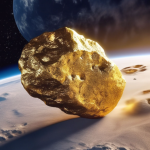
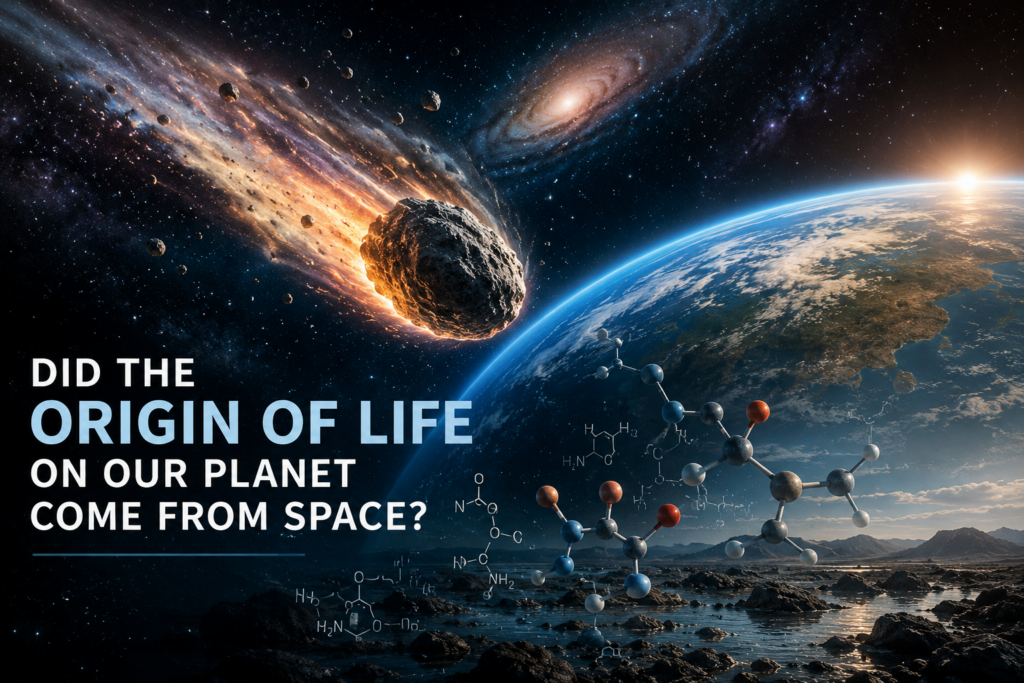
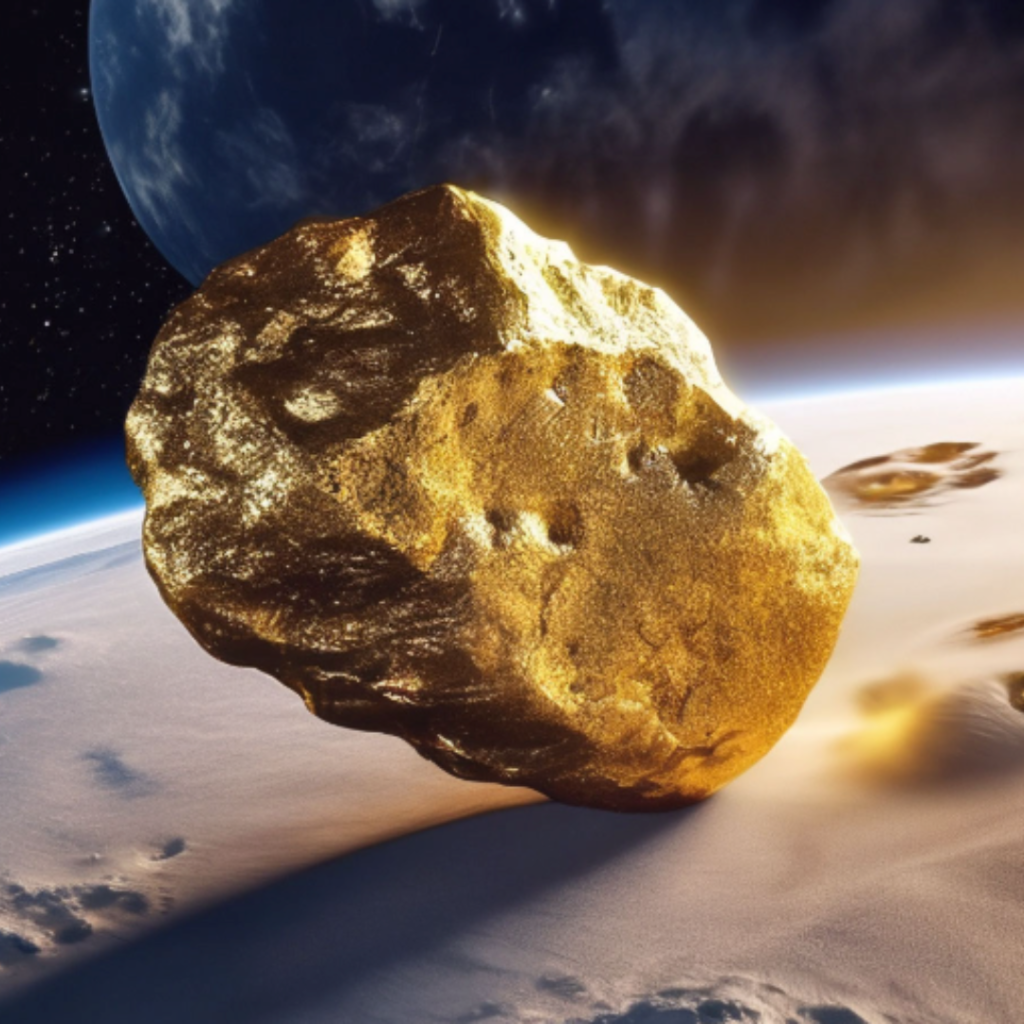
At first glance, the idea sounds like science fiction. Yet it is based on a well-established scientific concept known as lithopanspermia. According to this theory, powerful asteroid impacts can eject rocks from a planet into space. Some of these rocks may contain microorganisms protected deep within their structure. If those microorganisms survive the violent launch, the harsh conditions of space, and eventual arrival on another world, life could theoretically spread from one celestial body to another.
Earth has experienced countless large asteroid impacts throughout its history. Some of these collisions were energetic enough to throw debris completely out of Earth’s gravitational influence. Scientists already know that rocks from Mars have reached Earth, as meteorites originating from the Red Planet have been identified in laboratories. This demonstrates that natural exchange of planetary material is not only possible but actually occurs within our Solar System.
The new research asks a bold question: if rocks can travel between planets, could microscopic life from Earth have eventually reached Europa?
The journey would be extraordinarily difficult. Europa orbits Jupiter at a distance of nearly 780 million kilometers from the Sun. Any Earth-originating material would need to survive exposure to cosmic radiation, extreme temperatures, and travel times that could last millions of years. Yet some bacterial species on Earth have demonstrated remarkable resilience. Certain microorganisms can survive intense radiation, extreme cold, dehydration, and even temporary exposure to the vacuum of space. (Phys.org )
)
If even a tiny fraction of these microbes survived such a journey, the next challenge would be finding a suitable environment on Europa.
This is where Europa becomes especially interesting. Beneath its icy shell lies a global ocean of salty liquid water. Scientists believe this ocean may contain roughly twice as much water as all the oceans on Earth combined. The moon is also subjected to powerful gravitational forces from Jupiter, generating internal heat through tidal flexing. These characteristics make Europa one of the most promising environments for potential habitability beyond Earth.
Nevertheless, the habitability of Europa remains an active scientific debate. Some recent studies suggest that Europa’s seafloor may be relatively inactive compared with Earth’s ocean floors. On Earth, hydrothermal vents provide energy and nutrients that support entire ecosystems. If Europa lacks similar geological activity, life could face significant challenges in obtaining the chemical energy required for long-term survival.
At the same time, other discoveries continue to fuel optimism. Researchers have detected compounds such as ammonia and organic materials that may be linked to Europa’s subsurface environment. These findings suggest that some of the chemical ingredients associated with life may be present.
Perhaps the most important implication of this new research is not whether Earth actually seeded Europa with life, but how it changes our understanding of future discoveries.
Imagine that a future mission detects microbial organisms in Europa’s ocean. The first reaction would likely be that humanity has discovered extraterrestrial life. However, if Earth microbes could naturally reach Europa, scientists would face a new challenge. They would need to determine whether any discovered organisms truly originated on Europa or whether they were distant descendants of life that began on Earth billions of years ago.
This question becomes increasingly important as new exploration missions approach the Jovian system. NASA’s Europa Clipper mission, launched in 2024, is expected to provide unprecedented information about Europa’s ice shell, ocean, chemistry, and overall habitability during the coming decade. The mission represents one of humanity’s most ambitious attempts to investigate whether environments suitable for life exist beyond Earth.
The broader lesson is profound. Life on Earth may not be confined to Earth forever. Whether naturally through asteroid impacts or intentionally through future human exploration, biology has the potential to spread across the Solar System. The possibility that tiny microorganisms could travel between worlds reminds us that planets and moons are not necessarily isolated islands. Instead, they may be connected through complex cosmic processes operating over immense timescales.
For students of aerospace engineering, planetary science, and astrobiology, Europa represents more than a distant moon orbiting Jupiter. It is a natural laboratory where some of humanity’s biggest questions may finally find answers. How did life begin? Can life exist elsewhere? And perhaps most intriguingly, are we looking for alien life—or simply another branch of the same cosmic family tree that began on Earth billions of years ago?
The next decade of exploration may bring us closer than ever to answering these questions.
.












Add Comment