






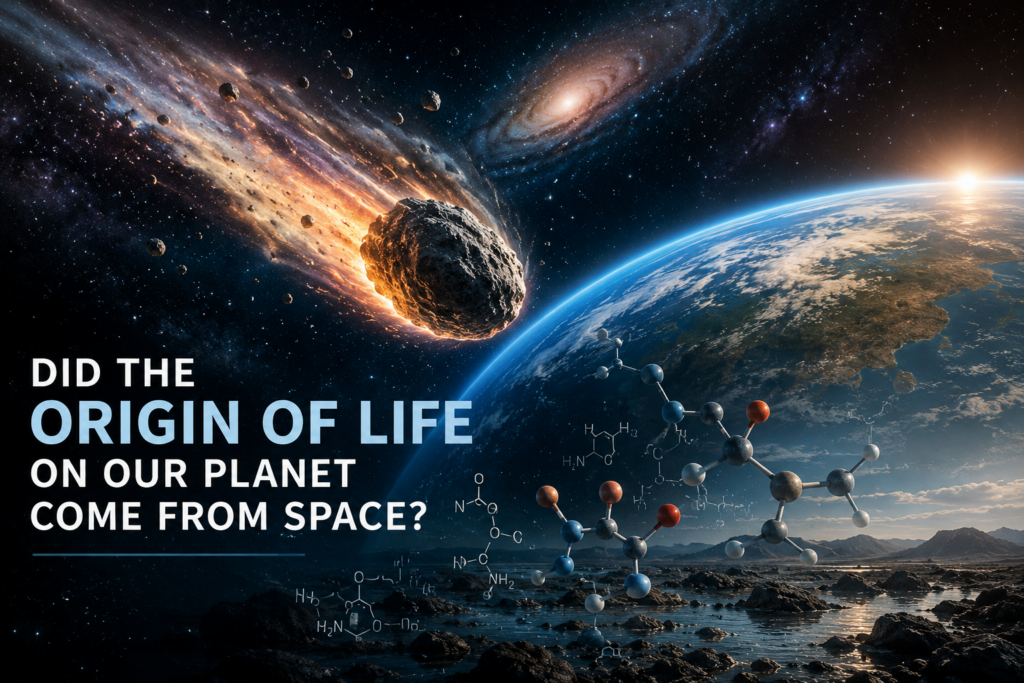
Ever since humanity first gazed up at the sky, it has pursued two fundamental questions: Are we alone in the universe, and how did life begin? Although these two questions may appear unrelated, they actually stem from the same root; for if we can understand how life emerged on Earth, we will also learn where and how to search for it on other planets.
Origins of Life
For millennia, philosophers, religious figures, and scientists have attempted to answer these questions in various ways. Yet, over the last two centuries, modern biology and geology have presented us with a shared narrative. According to this story, the Sun was the primary energy source for life. Without sunlight, photosynthesis could not occur; without photosynthesis, oxygen could not be produced; and without oxygen, complex life could not evolve.
Today, the prevailing narrative of life—taught everywhere from primary school textbooks to university lectures—is largely built upon this premise. However, the history of science has repeatedly shown us that even the most firmly established knowledge can shift with a new discovery. When we learned that Earth was not the center of the universe, the entire field of cosmology had to be rewritten. It took decades to accept the concept of continental drift. Many long-held geological assumptions were overturned when a massive asteroid was identified as the cause of the dinosaurs’ extinction. Perhaps we are now approaching a similar turning point.
What is Dark Oxygen?
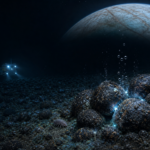
Research published in recent months has revealed the potential existence of an unexpected phenomenon in the pitch-black depths of the ocean, kilometers below the surface. Scientists have tentatively named this “dark oxygen.” At first glance, it sounds like something out of a science fiction movie, as there is no sunlight, no photosynthesis, and no plant life as we know it. Nevertheless, certain measurements indicate that oxygen is being produced. If these results are confirmed by independent research, not only marine biology but all theories regarding the origin of life will need to be re-evaluated.
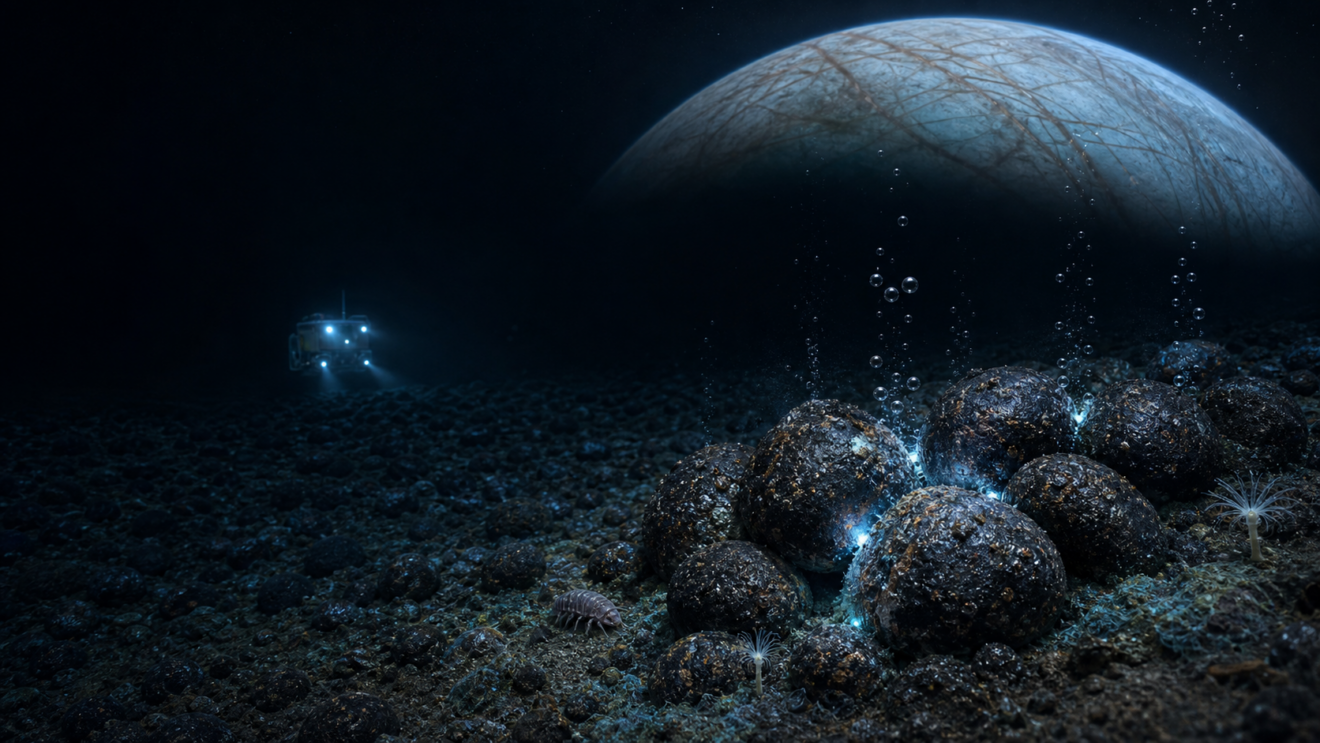
In fact, this story begins at the bottom of the ocean. Polymetallic nodules found thousands of meters deep in the Pacific Ocean have long attracted the interest of mining companies. These lump-shaped rocks contain critical metals such as manganese, iron, nickel, cobalt, and copper. Many high-tech applications, ranging from electric vehicles to spacecraft, rely on these metals. However, researchers encountered an unexpected situation while studying these nodules. The measured oxygen levels were higher than existing biological models could explain. Their initial thought was that the instruments had lost their calibration. Scientists checked for measurement errors, replaced sensors, and even repeated the experiments several times. Different teams employed different methods. The results, however, surprised the researchers even more. It appeared that oxygen was indeed being generated in certain areas. But how could this be possible?
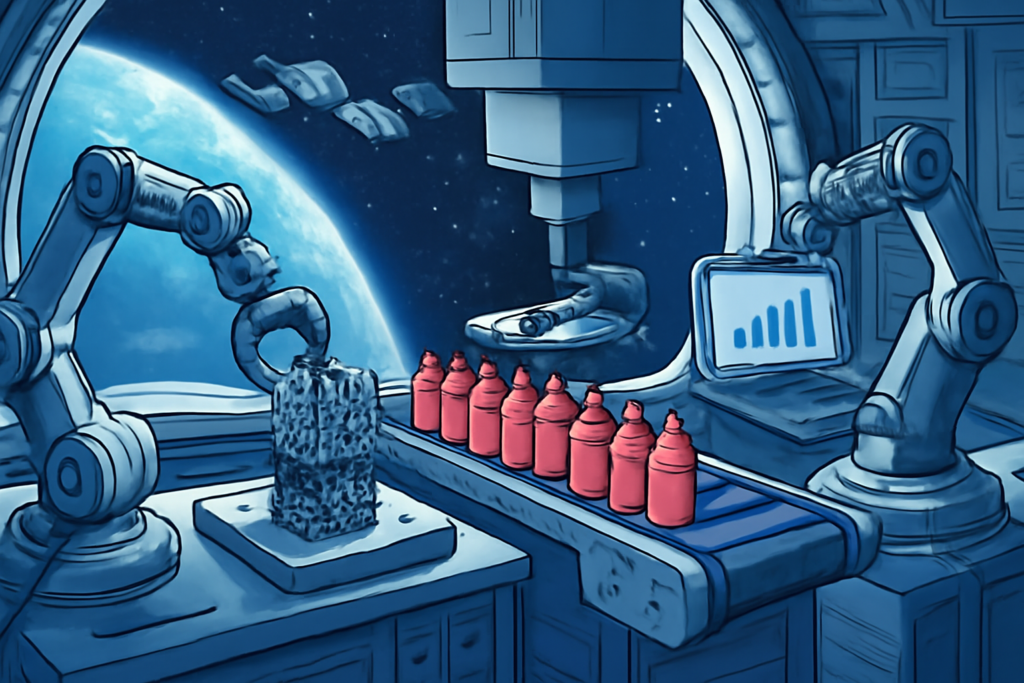
One of the most striking explanations proposed is that these metallic nodules might act like natural electrochemical batteries. Just as a battery can split water into hydrogen and oxygen using electricity, the millions of metallic nodules on the ocean floor might be initiating similar electrochemical processes at very low levels. Of course, the amount of oxygen produced is not vast enough to shape our atmosphere. Yet, even small-scale production continuing over millions of years could be sufficient to sustain microbial life.
It is precisely at this point that one of the cornerstones of biology begins to be shaken. For until now, it has been widely accepted that oxygen is primarily a product of photosynthesis. If oxygen can be produced in a completely dark environment, we will need to redefine the energy sources for life. This has direct implications not only for Earth’s past but also for the rest of the universe.
Life on Mars
About fifty years ago, NASA’s Viking missions focused on the surface while searching for life on Mars. It later became clear that the Martian surface is a highly hostile environment for life due to cosmic radiation. Today, however, scientists have turned their attention underground, as liquid water, minerals, and sources of chemical energy can be found there. If oxygen can be generated in the dark, the subsurface fracture systems of Mars could prove far more intriguing than previously thought.
Life on Europa
Even more exciting are Jupiter’s moon Europa and Saturn’s moon Enceladus. We now know that vast oceans lie beneath the icy shells of these two celestial bodies. The question of whether these oceans harbor life has been debated for years. Until now, the primary challenge in these calculations was the energy source, as sunlight cannot reach such depths. Now, however, a completely different possibility is being discussed: perhaps the energy required for life need not come solely from stars. It may be that the geological processes, metallic minerals, and chemical reactions of planets and moons can create environments capable of sustaining life for millions of years.
Although this idea might seem quite bold at first glance, nature has actually been providing us with clues about it for a long time. Hydrothermal vents on Earth—rich in chemicals and reaching temperatures of hundreds of degrees—host ecosystems that are entirely independent of the Sun. The bacteria inhabiting these regions utilize chemical energy rather than light, forming the foundation upon which the entire food chain is built. Giant tube worms, crustaceans, and a host of other organisms sustain their lives entirely within this chemical-driven world.
Life Born out of Darkness
Perhaps we have been searching for life in the wrong place all these years. Perhaps, while we kept our eyes fixed on the sky, the answer lay hidden on the ocean floor beneath our feet. Humans often fall into the trap of projecting their own experiences onto the universe. Because we live our lives in the daylight, we assumed that life begins with light. Yet, the universe does not concern itself with our habits; nature writes its own rules. If life can indeed originate in darkness, the number of habitable worlds in the universe could be vastly greater than our current calculations suggest.
If the Sun is not a prerequisite for the emergence of life, how many billions of oceans in the Milky Way might be quietly generating life right now? Perhaps the universe is not as silent as we imagine; perhaps we simply haven’t yet learned how to listen. The time has come to ask: if oxygen can truly be produced in the deep ocean independently of sunlight, will we merely rewrite our biology textbooks, or will we be compelled to re-examine our entire conceptual framework regarding humanity’s place in the universe?
There are discoveries in the history of science that do more than just generate new knowledge; they reveal that old questions were framed incorrectly. Copernicus removing Earth from the center of the universe was one such instance. Einstein defining space and time as a single, unified structure was another. Today, we may well be on the verge of an intellectual paradigm shift regarding the origins of life—one of comparable magnitude to previous breakthroughs. After all, our search for life has long been anchored to a single assumption: first the star, then light, then photosynthesis, followed by oxygen, and finally, complex life. If the initial links in this chain are not actually prerequisites, all our existing calculations will have to change.
The impact of this shift will extend far beyond academic circles; it will reshape the multi-billion-dollar exploration programs of space agencies. For years, robots searching for life on Mars have focused primarily on ancient lakebeds, river deltas, and surface minerals, while missions to Europa and Enceladus aim to locate hydrothermal vents within the oceans beneath their icy shells. Yet, the spacecraft of tomorrow might prioritize the investigation of metallic minerals—sites of intense electrochemical activity—as well as magnetic anomalies and natural energy sources. For the most valuable clue to life’s origins may lie hidden not in the light, but in the darkness.
Even more intriguing is the possibility that this discovery could imbue space mining with an entirely new significance. Currently, discussions regarding metallic resources on the Moon, asteroids, and other celestial bodies center largely on their economic value; nickel, cobalt, platinum-group elements, and rare metals are viewed as the raw materials that will fuel the industries of the future. However, if it is revealed that these same minerals can trigger chemical processes conducive to the emergence of life under specific conditions, space mining will evolve from a purely economic endeavor into a field of biological and astrobiological research. An asteroid would then be viewed not merely as a rich mineral deposit, but as a silent witness to the chemical evolution that unfolded billions of years ago. Perhaps the scientists of the future, when bringing a meteorite into the laboratory, will not merely analyze the metals within it. They will also investigate the electrochemical processes that the rock fragment underwent over billions of years, the molecules it formed, and whether it carried the early building blocks of life. In such a scenario, the boundaries between geology and biology would largely disappear.
These developments will also directly impact research into artificial life. Today, researchers in the field of synthetic biology are seeking ways to create new metabolic pathways in laboratory settings. If nature has evolved systems capable of producing oxygen in the dark, humanity might one day design biological life-support systems operating on similar principles for lunar bases, Mars colonies, or deep-space stations. Perhaps the space colonies of the future will breathe through electrochemical bioreactors rather than relying on giant greenhouse domes.
At this juncture, one inevitably asks: Is life truly as fragile a phenomenon as we once believed? Or is the universe a vast laboratory striving to generate life wherever the right chemical conditions exist? Could this imply that life on Earth is not, in fact, unique? We cannot yet provide a definitive answer to this question. After all, science advances through inquiry rather than certainty. Confirming the “dark oxygen” hypothesis requires further measurements, additional experiments, and independent verification by various research groups. That is the beauty of science: extraordinary claims demand extraordinary evidence. Yet, every major revolution in the history of science began with a bold question.
For this very reason, it would be a grave mistake to view this debate merely as the story of a few rocks on the ocean floor. What is truly at stake here is not oxygen, but life itself. Perhaps a century from now, our children will study today’s biology textbooks as historical documents. Science constantly teaches us humility. The universe is far more inventive than human imagination; just when we think we know it all, nature opens up an entirely new door. All of this carries a profoundly important message for Turkey as well. For many years, we viewed space exploration as consisting solely of rockets, satellites, or launch systems. Yet, true space power will stem not merely from nations capable of sending vehicles into space, but from those that generate new knowledge about it. The competition of tomorrow will not play out between the builder of the largest telescope and the developer of the most powerful engine; rather, it will unfold among nations capable of explaining the origins of life, discovering new energy mechanisms, and transforming these into technology. That is why the concept of a “Science Homeland” is no longer a romantic ideal, but a strategic necessity. Societies that do not produce science are condemned to purchase technologies developed by others, whereas those that do produce science write the rules of the future.
Yet, there is a concept that goes even further. The “Space Homeland” is not merely the satellites we have in orbit. The Space Homeland is the scientific experiment conducted on the lunar surface; the laboratory capable of deciphering an asteroid’s chemical composition; the sensor designed to analyze the icy crust of Europa; the new energy system developed for deep-space missions; and the bold dream conceived by a young researcher in the lab during the late hours of the night. For the path to having a voice in space lies not only in reaching it but in understanding it.
Perhaps the greatest discovery of the next fifty years will not be a new planet. Nor will it be a new element. Perhaps humanity will learn that life is far more tenacious, resilient, and widespread than previously imagined. On that day, when we gaze at the sky, we will see the stars differently; for we will no longer think merely of the planets orbiting them, but of unseen oceans—perhaps of microscopic organisms breathing silently in the darkness, or of chemical miracles that have gone unnoticed for billions of years. And perhaps for the first time, we will realize that the universe’s greatest secret lies not in the brightness of the stars, but in the patience of the darkness.










Add Comment