









Since the twentieth century, numerous scientists and science fiction writers have questioned the existence of intelligent extraterrestrial life, citing the sightings and documentation of Unidentified Flying Objects (UFO) in various locations as evidence. The Drake Equation—which I have discussed in previous articles—also statistically suggests the possibility that other intelligent life forms may exist within our galaxy. In this sense, while the existence of extraterrestrial civilizations is considered a scientific probability, little evidence or trace supporting this notion—aside from UFOs themselves—has been discovered. Moreover, given that a UFO is, by definition, an *unidentified* flying object, such sightings could stem from a variety of origins. Not every object photographed and labeled a “UFO” is necessarily extraterrestrial in nature; in fact, the vast majority of these sightings have natural explanations.
UFO Files are Being Released
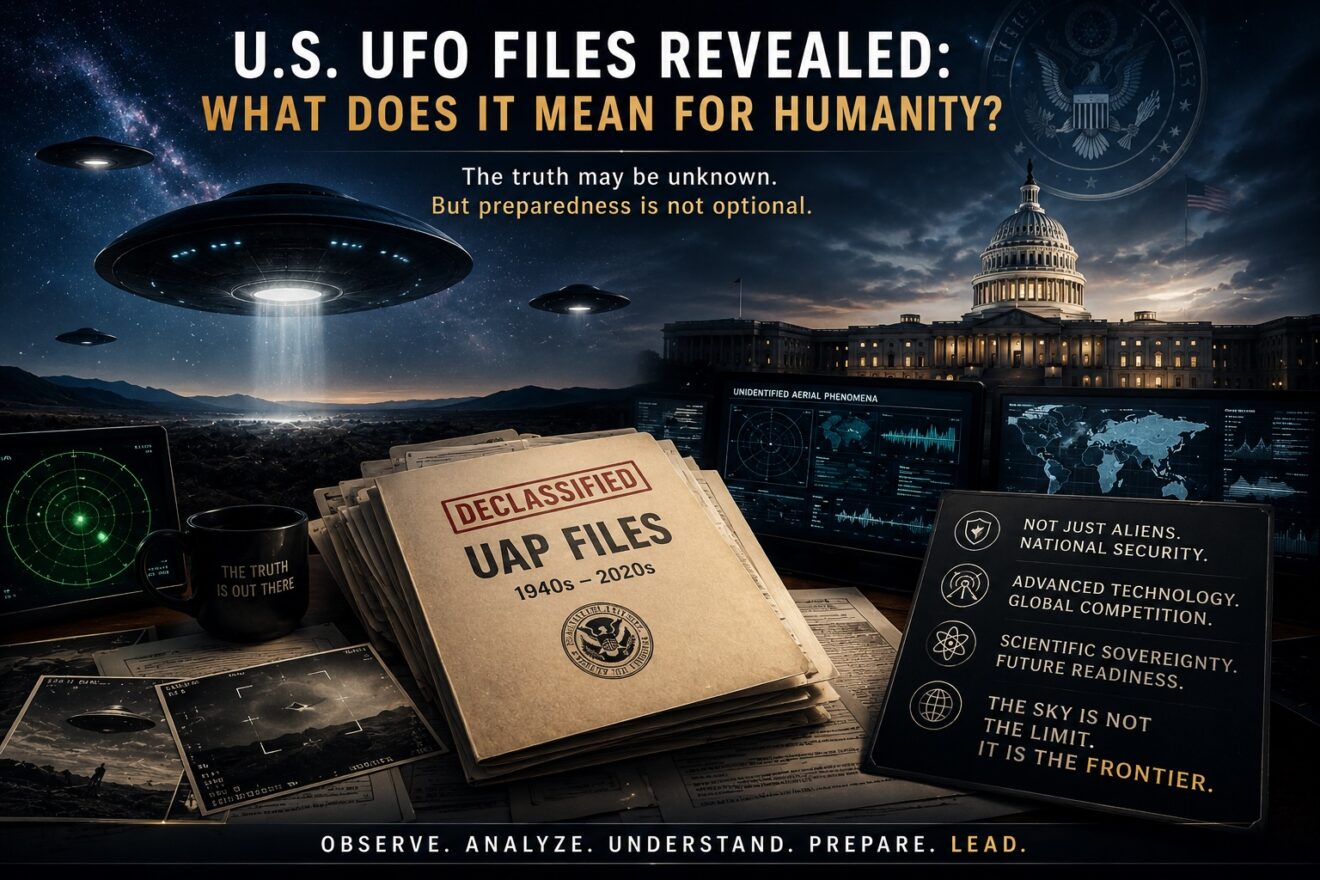
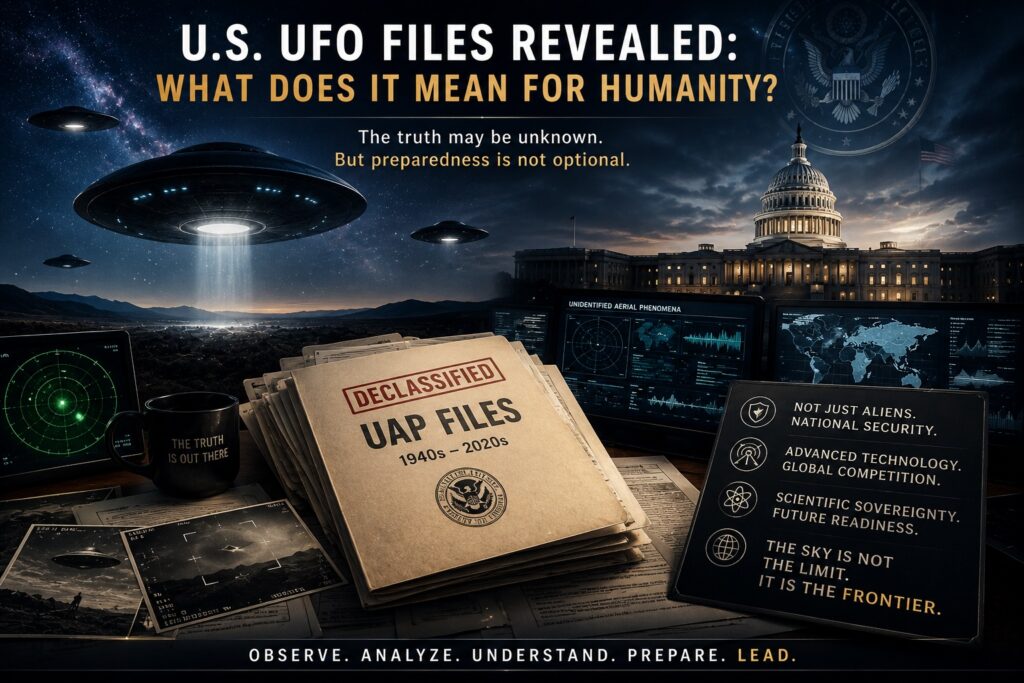
Last week, the United States declassified and released to the public a new batch of UFO files—records that have long been a subject of intense public curiosity. The initial release, published on May 8, 2026, comprises documents, photographs, and videos sourced from NASA, the FBI, the Department of Defense, and other government agencies. The disclosed files span a period of approximately 80 years; however, the documents currently available do not yet offer definitive or compelling evidence of extraterrestrial technology. Nevertheless, the Pentagon has indicated that additional files will be released in stages over the coming weeks.
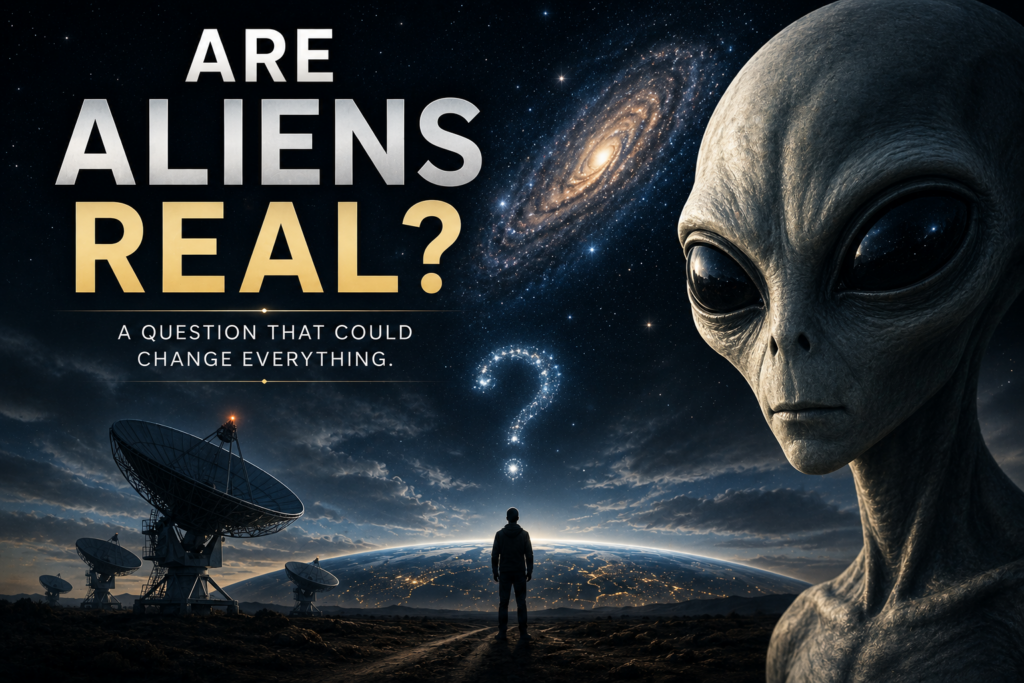
Are Aliens Real?
Yet, the issue at hand is not merely confined to the question, “Do aliens exist? Are aliens real?” The fundamental question we ought to be asking is this: How does humanity react when confronted with a phenomenon in the sky that it cannot comprehend? Does it respond with fear? Does it resort to denial? Or does it proceed to investigate the matter with scientific composure?
What are Unidentified Anomalous Phenomena or UAP?
As I noted earlier, the subject of UFOs has, for decades, remained overshadowed by the realms of popular culture, conspiracy theories, and Hollywood cinema. However, the terminology currently in use has shifted: the term employed is no longer “UFO,” but rather “UAP”—that is, “Unidentified Anomalous Phenomena.” Even this subtle linguistic shift is significant; for the subject has now evolved beyond the mere concept of “flying saucers” to encompass the realms of airspace security, advanced sensor technologies, AI-assisted surveillance systems, and national defense.
The declassified files contain a wealth of documentation, ranging from observations made during the Apollo era to those from the Gemini missions, and from historical FBI records to various photographic and video archives. Nevertheless, a significant number of scientists point out that much of this data suffers from low resolution, lacks sufficient context, or is susceptible to optical illusions. Indeed, in its own prior assessments, NASA had acknowledged the existence of UAP incidents while simultaneously stating that there was no reliable evidence to suggest a link between these phenomena and extraterrestrial technology.
Are UFOs Real?
Yet, at this juncture, we must pause to ask a more profound question: If 95 percent of these incidents can be attributed to birds, balloons, atmospheric phenomena, camera reflections, or human-made technology, then what might account for the remaining 5 percent? It is precisely this remaining territory that gives us pause.
Perhaps the truth that emerges in the coming years may not, after all, concern extraterrestrial life as we have imagined. A more startling possibility is this: Some UAP sightings could actually be hypersonic vehicles, advanced unmanned systems, plasma-based experiments, electromagnetic deception technologies, or AI-controlled micro-aerial vehicles belonging to rival nations. In such a scenario, the issue becomes far more serious than mere aliens, for anything you cannot identify constitutes a vulnerability in your air defense system.
If a nation cannot identify what occupies its skies, it cannot truly safeguard its future.
Military Implications of UFOs
While the US’s decision to declassify these files today may appear to be a move toward transparency, it also serves as a strategic message. Washington may well be signaling this: “We take the unknown in our skies seriously.” But to what extent does Turkey take this unknown seriously? Are our radars, satellites, optical tracking systems, and AI-augmented airspace analysis infrastructure sufficiently advanced to classify such phenomena?
This is not merely a military question; it is a question of scientific sovereignty.
For in the 21st century, independence is no longer safeguarded solely by land, sea, and border lines. Today, independence is secured through data, satellites, sensors, quantum communications, AI-driven analytics, and space situational awareness. If you are unable to identify an object in your skies using your own data, you are left with no choice but to accept someone else’s explanation. And that, precisely, is the most insidious form of scientific dependency.
Perhaps the files to be released tomorrow will contain clearer imagery. Perhaps certain historical documents will reveal that the legends recounted for years were, in reality, nothing more than misinterpreted atmospheric phenomena. Perhaps some records will bear traces of advanced technologies—human-made, yet unknown to the public. Indeed, we may even encounter phenomena exhibiting physical behaviors that we cannot yet explain—events that could truly shake the scientific world.
But whatever comes to light, the fundamental lesson remains unchanged: The unknown is not understood through denial, but rather through measurement, documentation, analysis, and the application of national scientific capacity. The UFO files serve as a reminder: The universe is not merely a distant vista viewed through a telescope. It is, at the same time, a matter of security, a matter of technology, a matter of philosophy, and an endeavor by humanity to comprehend its own place within the cosmos. When we gaze up at the sky, we are, in reality, observing not only the stars but also the scope of our own civilization.
Let’s not forget that “Not only the Universe is stranger than we think, it is also stranger than we can think”
Key Points of the Article for Researchers and Students
- Recent UFO File Releases by the US Government: A new batch of declassified UFO files released by the US government includes documents, photographs, and videos from various agencies, but currently lacks definitive evidence of extraterrestrial technology.
- The Fundamental Question of Extraterrestrial Existence: The debate isn’t just about whether aliens exist, but how humanity responds to unexplained phenomena in the sky—fear, denial, or scientific investigation.
- Evolution of UFO Terminology to UAP: The shift from ‘UFO’ to ‘Unidentified Anomalous Phenomena’ reflects a broader understanding that includes advanced technology, airspace security, and national defense concerns.
- Challenges in Identifying UAPs and Their Origins: Most UAP sightings are explainable by natural or human-made causes, but 5% remain unexplained, raising concerns about advanced military technology and airspace security.
- Implications for National Security and Scientific Sovereignty: Unidentified phenomena in the skies could indicate advanced adversary technology, highlighting the need for strong surveillance, data analysis, and scientific capabilities to maintain sovereignty.











Add Comment