






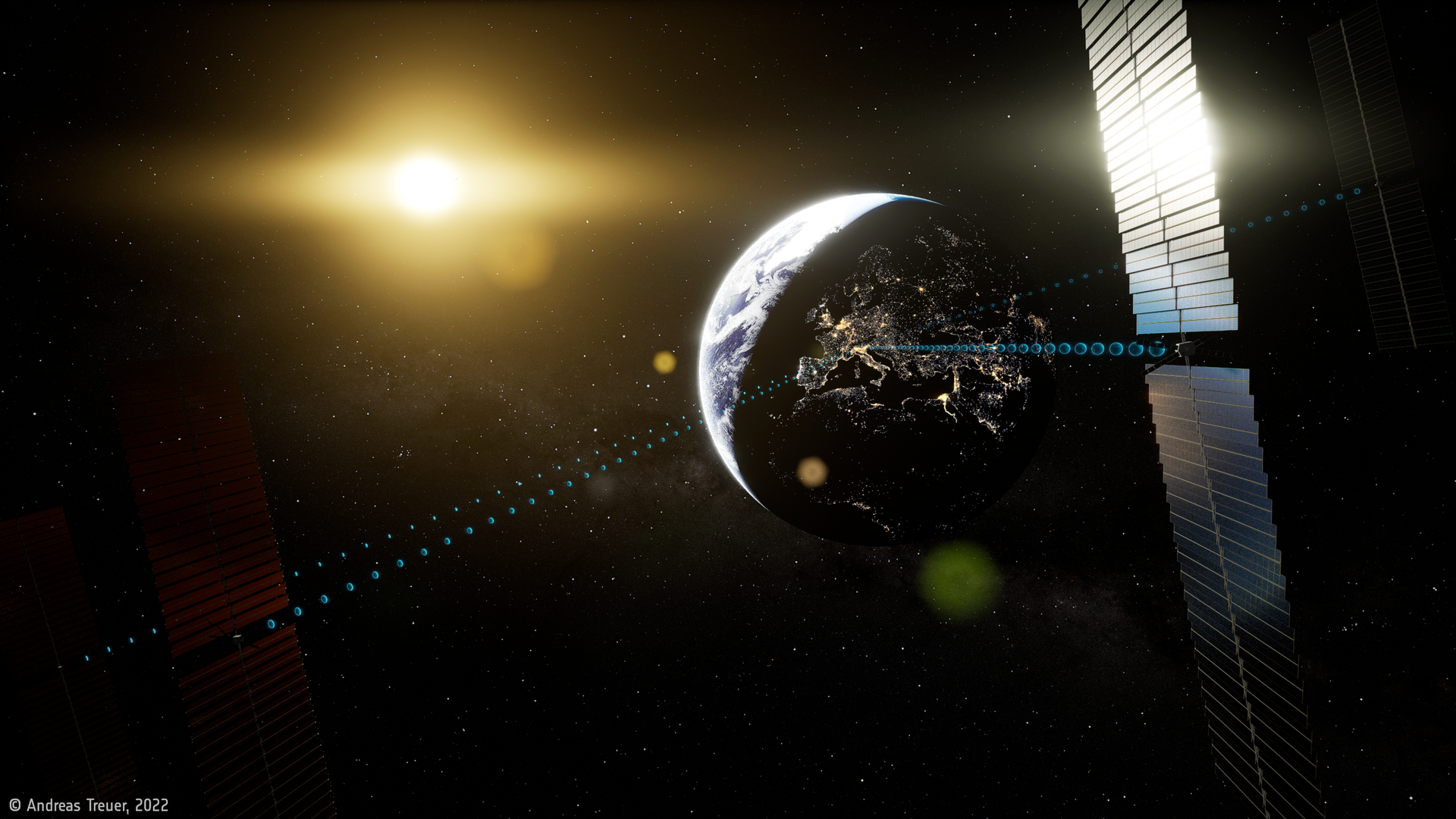


Since the twentieth century, humanity has constantly questioned, through science fiction writers and scientists alike, whether we are alone in this universe or whether there are other living beings. This question remains relevant in the 21st century. After the end of World War II, the US Air Force established working groups to study extraterrestrial beings and unidentified aerial objects (UFOs), and some of these groups continue to actively conduct analyses even today. In addition, NASA has established a research group called SETI, which scans our galaxy with radio telescopes and long-range space telescopes to search for signs of life. From time to time, messages are sent to specific regions of the galaxy using giant radio telescopes, and the radio waves coming from the galaxy towards Earth are analyzed to determine if there is a response from intelligent life. The data collected at annual meetings is shared and discussed with other scientists. Out of curiosity, I have occasionally attended such meetings, and since the researchers were mostly NASA scientists, I have at least taken their work seriously. However, I can say that so far no concrete evidence has been found. So what happened that suddenly everyone started saying UFOs are real?
 Are UFOs Real?
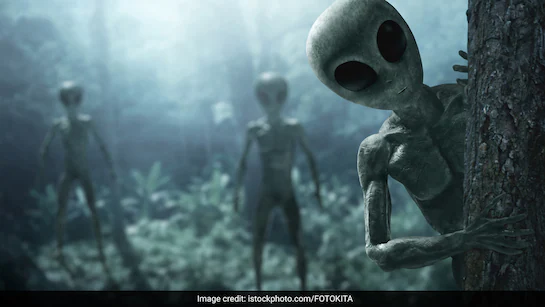
Most recently, former US President Barack Obama stated that aliens are real, but he hadn’t seen them, and that no aliens were being held in any US government facilities, or if they were, he hadn’t been informed while he was president. Following this, current US President Donald Trump said that Obama had revealed classified information about aliens and that he could reveal all the information about aliens, and of course, the world public became very attentive. Currently, when we look at foreign media outlets, everyone is debating whether aliens are real, and this is naturally reflected on social media. Of course, if we look at the psychological impact of the event, humanity is currently complaining about the state of the world. Everywhere, on almost every continent, there are people dying unnecessarily from war, drought, poverty, food shortages, and disease. The world’s resources are definitely not distributed fairly, and billions of people live in very difficult conditions, babies are dying, and there is a general despair worldwide. Perhaps the concept of the existence of aliens is important from this perspective. If a more intelligent, non-human civilization were to emerge, it’s possible they could help us, or at least we could learn from them and, as humanity, unite to build a world where borders are unnecessary, and everyone on Earth has equal access to resources. I think the existence of aliens keeps this hope alive and inevitably arouses interest.
Are Aliens Real?
So, are aliens real? Do extraterrestrial intelligent beings really exist? It’s estimated that our galaxy contains around 400 billion stars, or solar systems. The Andromeda Galaxy, our closest galaxy, is thought to contain 1 trillion stars. Considering our universe is approximately 15 billion years old, we can clearly assume there are trillions of galaxies. In the 1970s, scientist Frank Drake attempted to calculate a probability based on the Drake equation. Based on this equation, estimates range from 23 to thousands of civilizations within our Milky Way galaxy, taking various factors into account.
What is the Fermi Paradox?
But if there are so many civilizations in our galaxy, where are they? Why haven’t we heard or seen any of them, or found any concrete evidence of their existence? This is where Enrico Fermi’s famous Fermi Paradox comes into play, posing the same question we just examined: If there are tens of thousands, perhaps hundreds of thousands, of civilizations in the universe, why haven’t we encountered any signs? There are several possible answers to this paradox. The most famous is the theory that we are alone in the universe, but this doesn’t seem very logical. Another is that an extraordinary event (like a massive world war) causes civilizations that have reached a certain level to disappear at a certain point. Another explanation is that we are in a shallow region of the universe and therefore have not encountered anyone. However, this theory does not align with astronomical data. The last explanation is that because Earth civilization is still technologically, scientifically, and perhaps most importantly, ethically (wars, famine, etc.) behind, non-human civilizations deliberately avoid contact with us, and we are in a kind of quarantine. Thus, even if we search, we cannot find any traces of them. Perhaps this is the most logical explanation, and perhaps one day we will manage to break out of this quarantine.
Do Extraterrestrial Civilizations Exist?
Therefore, there are multiple explanations and possibilities. As a scientist, my knowledge and belief is that if there are so many galaxies and billions of star systems in each galaxy, then surely some of them have developed the biological and chemical conditions necessary for life to arise. Considering that the universe is 15 billion years old, these life forms must have managed to establish civilizations and are likely more advanced than humanity scientifically, technologically, and ethically. As a scientist who believes that curiosity is inherent in all living things, I am one of those who think that these other civilizations are also searching and that there is a possibility that their traces will one day be revealed. Who knows, perhaps Trump will reveal some secret information, giving some clues about the traces of these civilizations. However, whatever the answer to the question, the very act of asking the question is a rewarding scientific quest in itself and, for the reasons mentioned above, a quest that fuels humanity’s hope. What do you think? Do extraterrestrial civilizations exist? If so, why haven’t we found any traces of them yet? Please share your thoughts in the comments.
Keypoints of the Article
- UFO Research and Government Involvement: After World War II, U.S. military and NASA scientists have been studying UFOs and extraterrestrial phenomena, but so far, no concrete evidence of alien life has been found despite ongoing searches.
- Recent Public Statements on Aliens: Prominent political figures like Obama and Trump have sparked renewed interest and debate over the existence of aliens, often linking it to national security and potential secrets held by governments.
- The Scale of the Universe and Probabilities of Alien Life: With billions of stars in our galaxy and trillions across the universe, scientific estimates (like the Drake Equation) suggest thousands of potential civilizations, though definitive contact has yet to be made.
- The Fermi Paradox and Possible Explanations**: Despite the high probability of alien civilizations, the lack of contact raises questions, with theories ranging from Earth’s uniqueness to the idea that advanced civilizations intentionally avoid contact or are in quarantine.
- The Scientific and Philosophical Implications of Alien Existence**: Given the universe’s vastness and age, it’s plausible that extraterrestrial life exists, and discovering their traces could profoundly impact humanity’s scientific understanding and worldview.










Add Comment